Podcast episode titles are often written last, but they shape first impressions. A clear and useful title helps listeners understand whether an episode is relevant before they even press play. Strong titles improve click-through rates, increase retention, and establish consistent expectations for your show.
This guide outlines the principles we use when evaluating podcast titles across thousands of Podpage sites. Our goal is to give podcasters simple, repeatable methods for producing titles that work.
Why Podcast Titles Matter
Podcast apps and search engines display only a handful of words before truncation. This means every title must communicate the episode’s core value immediately. Listeners skim quickly, and ambiguous or crowded phrasing lowers engagement.
A strong title helps with:
- clarity — listeners should understand the topic in seconds
- discovery — concise wording helps platforms index content correctly
- consistency — predictable patterns help new visitors navigate your feed
These factors affect how episodes perform over time, especially for shows releasing multiple episodes per week.
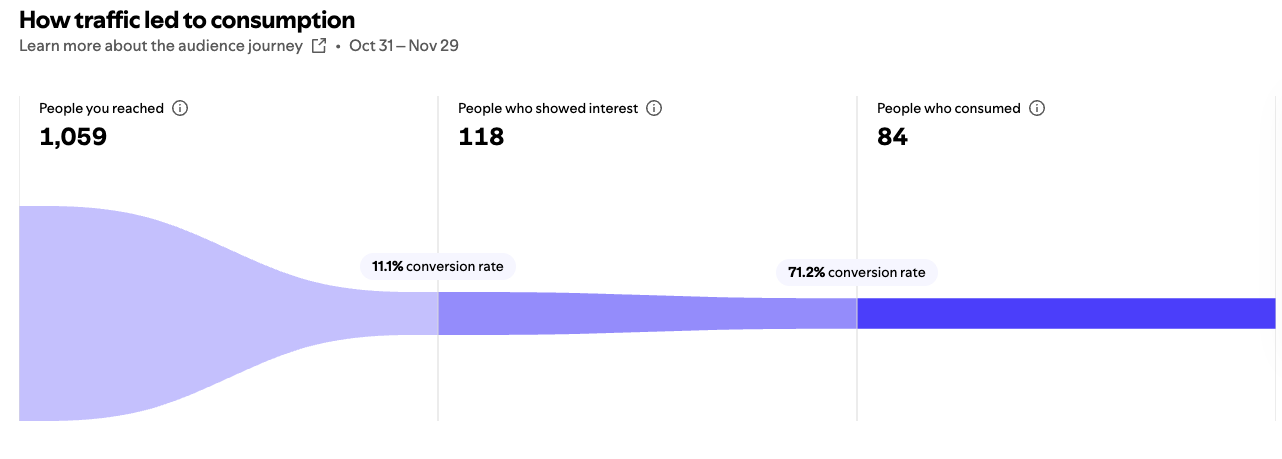
Great Title Convert To Listeners
In Spotify you can see "People You Reached" (so people who saw your show), and "People who interacted" (they clicked on your show or episode). Then you can also who actually pressed play.
Start With the Listener's Intent
Listeners open podcast apps with specific goals: to learn something, solve a problem, or hear a story. Titles that reflect these goals outperform abstract or clever phrasing.
Effective titles often mirror search intent. For example:
- How to manage distributed engineering teams
- Why mergers fail and what leaders can change
- A practical guide to building an emergency fund
Each title sets the topic, the scope, and the expected takeaway. When possible, aim for language that directly answers the listener’s implicit question.
Be Concrete Not Clever
Clever titles are tempting, but they rarely scale across dozens of episodes. Ambiguous wording also reduces relevance signals for search engines.
We recommend concrete nouns and actionable phrasing:
- use specific topics rather than broad themes
- avoid metaphors that require additional context
- favor direct statements over rhetorical questions
For interview shows, avoid titles that use only the guest’s name. Combine the name with a clear descriptor of the topic. For example: Sam Patel on designing scalable robotics systems.
Another way to look at this is, "What is the benefit of listening to this interview?"
Front Load the Most Important Words
Most podcast players truncate titles after 40–60 characters. Place the core concept first. Avoid long preambles or descriptive clauses that push the main idea to the end.
Example shift:
- Weak: A conversation about cybersecurity trends in 2025 with Julia Tan
- Strong: Cybersecurity trends for 2025 — with Julia Tan
Build a Consistent Structure
Structural consistency helps repeat listeners understand your catalog and helps new visitors browse efficiently. A repeatable title format also reduces the time spent drafting each week.
Common patterns that work well:
- How to [specific goal]
- [Topic]: [clear descriptor]
- [Guest name] on [expert domain]
- Why [problem] happens — and how to fix it
Choose a pattern that aligns with your content style and stick to it across seasons.
Use Keywords Naturally
Keywords should support clarity, not replace it. Think of keywords as the language your audience already uses when searching for answers.
Use them when they genuinely help define the topic. Avoid stacking several keywords in one title, which reads unnatural and may be penalized by search tools.
For example, a finance show might naturally use:
Retirement planning for first-time investors
Rather than:
Retirement investing planning 401k Roth IRA beginners guide
Avoid Filler Words and Unnecessary Details
Words like “episode,” “special,” “part one,” and “conversation with” often slow the title without adding information. Remove anything that doesn’t directly support clarity.
If you need to convey additional context, include it in the episode description rather than the title.
Review Titles as a Collection, NOT Individually
Titles should be consistent not only within an episode but across your full library. Review your feed periodically to confirm:
- titles follow a predictable structure
- phrasing is concrete
- first words communicate the topic
- interview episodes follow a uniform format
This review helps maintain coherence, especially as a show evolves.
How Podpage Helps You Optimize Titles
Podpage automates the distribution and display of your titles across your website. When your titles are consistent and concrete, Podpage surfaces them cleanly in episode lists, search pages, and structured metadata. This ensures listeners can scan quickly and find the material they want.
Our goal is to help podcasters focus on good content—while providing a framework that presents that content clearly and efficiently.
One Last Point About Episode Titles
Think of the title of your episode as a promise. When we introduce AI into writing our titles, it can be a disaster. Write a great title, and get that that content that the title promised as quickly as possible.


